Is Anger Bad Energy? Why the Label Is the Real Problem
By Laura Carbajal, Inner Fire Alchemy · Published 2026-07-30 · Last updated 2026-07-30 · 9 min read
Founder of Inner Fire Alchemy, combining over two decades of executive experience and dedicated study in emotional sovereignty, shadow work, and self-mastery.
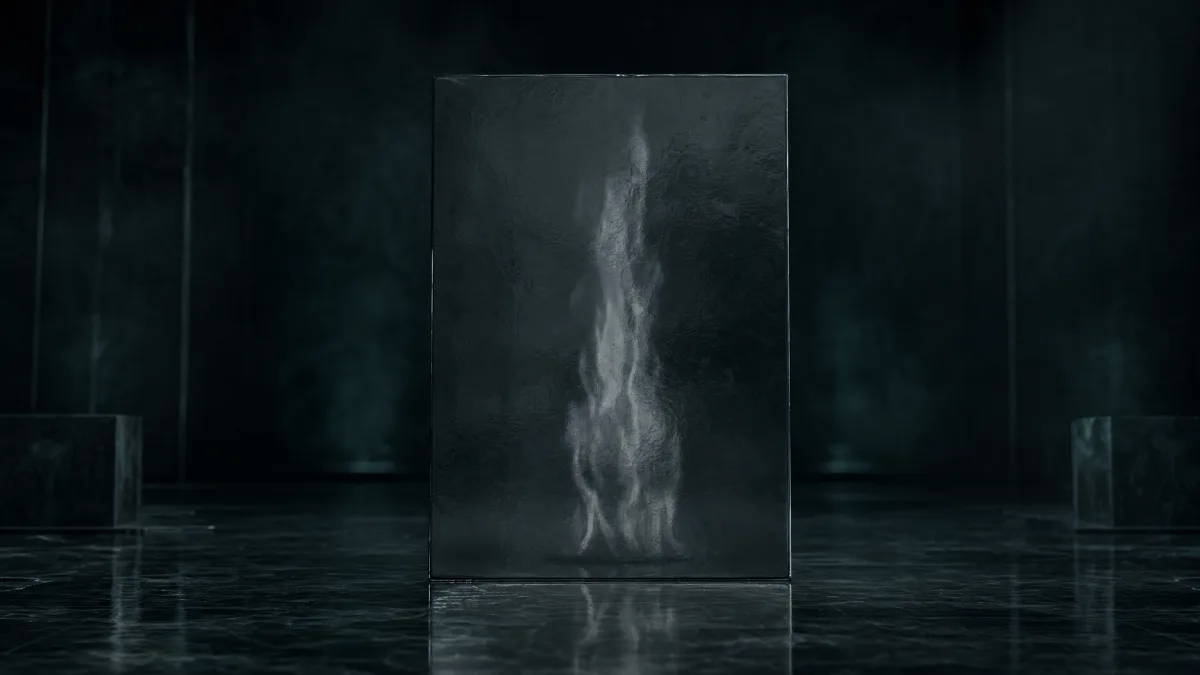
Quick answer: Anger is not bad energy. Anger is a state of physiological activation that carries no moral value until someone assigns one. The judgment placed on that activation is a second and separate event, and it is the one that produces shame, concealment and accumulation — not the activation itself.
Ask most people whether anger is bad and the answer arrives instantly. Yes. It is the one emotion nearly everyone has agreed to treat as a defect — something to be managed down, apologized for, or risen above.
That agreement does more damage than the anger. The moment anger is classified as bad, something else happens that almost nobody notices: you stop working with a sensation and start building a case against yourself. The charge is still there. Now there is also a prosecution.
What follows separates those two events — the activation, and the ruling you pass on it — and shows why only one is optional. You will leave with a working distinction between naming anger and evaluating it, and a seven-day practice that changes only what you call it.
In this article
- Why calling anger bad is a separate act from feeling it
- What anger actually is before anyone assigns it a value
- How a verdict on anger turns into shame, then concealment
- Verdict or description: what each does to the same charge
- Why direction, not judgment, decides what anger becomes
- The seven-day relabeling practice, day by day
- Frequently asked questions
- What changes when you stop making your intensity wrong
Why calling anger bad is a separate act from feeling it
Feeling anger and judging anger are two separate events, and only the second one is yours. The activation fires on its own schedule, faster than deliberation. Judging anger as bad is a second event, separate from the anger, and the only one of the two you actually choose.
Almost nobody experiences them as two. They arrive close enough together that the whole thing registers as one sensation — the heat, and the wrongness of the heat, fused. That fusion is why most anger work fails before it starts: you cannot get leverage on something you have not separated into parts.
Separating them is not a technique. It is a piece of noticing that takes four seconds. There is a charge here is a fact. This charge should not be here is a claim, added by you, and a claim can be declined.
The moment you label it as bad, you start a war with yourself.
That war is expensive in a precise way: it spends the same energy the anger was carrying.
What anger actually is before anyone assigns it a value
Anger is a state of heightened physiological activation, and nothing more than that until interpretation arrives. Anger is a state of physiological activation that carries no moral value until someone assigns one. In the body it reads as raised alertness, more available energy, narrowed focus — the sympathetic branch of the autonomic nervous system doing what it evolved to do when something that matters is being crossed.
That state is morally blank. Electricity is the closest ordinary comparison: the same current lights a room or stops a heart, and nothing about the current decides which. Handling decides.
In the alchemical framework, this condition has a name. The prima materia is the base material described as neither pure nor corrupt — valuable precisely because it is unformed and can be worked. Mary Anne Atwood's 1850 survey of the hermetic literature treats that neutrality as the starting condition of the whole operation.
That is symbolic vocabulary, not a physiological claim, and the two should never be run together. As a frame for anger, though, it is more accurate than the moral one most of us inherited.
How a verdict on anger turns into shame, then concealment
The verdict does not remove the charge. It adds a second emotion, pointed at you. The verdict on anger produces shame, and shame drives concealment rather than repair.
The distinction doing the work is between shame and guilt, which most writing collapses. Guilt is about something you did; it points at behavior and motivates repair. Shame is about what you are; it points at the self and motivates hiding. Tangney, Stuewig and Mashek's review of the moral emotions draws that line, and explains something puzzling: people who feel worst about their anger are often least able to change it. Repair needs contact. Shame's instruction is to withdraw.
Concealed anger does not dissipate. It accumulates and surfaces as resentment, passive aggression, flatness, or a jaw that will not release — where the charge settles in the jaw, throat and chest is its own mechanism.
When shame around anger is constant rather than occasional, when the charge is already breaking into action, or when it traces to earlier harm, that is the point to work with a therapist rather than a framework — SAMHSA's national helpline is a place to start. Writing hands you a distinction. It cannot hand you a witness.

Verdict or description: what each does to the same charge
Describing anger changes what your system does with it. Evaluating anger does not. Naming anger settles the system; evaluating anger does not.
The research usually cited here is narrower than its popular version, and the narrow version is the interesting one. Lieberman and colleagues found that putting feelings into words — attaching an affect label to an emotional image — was associated with reduced amygdala response, while other ways of attending to the same image were not. That is a finding about naming affect during image viewing. It is not a finding about managing anger and should not be stretched into one. What it does establish is that naming an emotion and reacting to it are different operations in the body, not two words for the same move.
The verdict and the description are two responses to one charge, and they diverge across four dimensions.
| The verdict: "this is bad" | The description: "there is a charge here" | |
|---|---|---|
| Where attention goes | Onto yourself | Onto the situation |
| Effect on the charge | Adds a second emotion | Leaves one thing to work with |
| What becomes possible next | Concealment | A choice |
| Cost over time | Accumulation | Information |
The description leaves you holding one thing you can act on. The verdict leaves you holding two problems, and the second one is you.
Why direction, not judgment, decides what anger becomes
The same charge produces three different outcomes, and the variable is direction, not moral status. The outcome of anger is determined by direction, not by the label attached to it.
The exact moment stands out sharply: sitting across a boardroom table during a high-stakes budget review, my heart rate didn't spike, nor did my voice rise. Instead, a cold, immediate verdict crystallized in my chest before a single sentence was spoken — an absolute refusal to yield ground, disguised as clinical detachment. I didn't yell; I simply shut down the negotiation before it began. It took years to realize that this sudden, icy certainty wasn't professional poise — it was my somatic anger executing a defense protocol before my conscious mind even recognized the threat.
That refusal was a ruling aimed at the room. Underneath it sat a charge I had never named, and an older ruling aimed at myself that had put the whole category out of bounds long before.
Held down: the charge that keeps accumulating
Suppression is a stance, not a failure of will. The signal gets pushed under, pressure builds, and it resurfaces as delayed eruption or quiet resentment. Suppression simply is not integration. What the holding costs you meanwhile is its own accounting.
Let loose: the charge that is running you
Discharge feels like release and is not release. Venting, snapping, the honest outburst — the energy leaves the body without acquiring a direction, and the damage arrives after. Catharsis stopped holding up as a model long ago, and why discharging it does not release it sets out why.
Directed: the charge that does work
Conscious direction means the charge is felt fully, somewhere acting on it is not required, and then aimed. You notice where it lives. You ask what it protects — a boundary, a value, a need. Then you choose. Directing is the third move rather than the first, and how conscious direction works once the charge has actually shifted covers the two that precede it. Unmanaged, fire destroys. Contained and directed, it powers everything forward.
The seven-day relabeling practice, day by day
Seven days of changing what you say about anger, before changing anything you do with it. It works on the language layer only, deliberately: the vocabulary has to move first. Where the charge sits in the body is covered in the domains where undirected anger collects.
- Day one — count the verdicts. Notice how often you call your anger bad. Do not correct it. Count it.
- Day two — swap the word. Replace bad with activation. Same event, different label. Notice what changes in your body when you say it.
- Day three — feel it without ruling on it. Let the charge be present for sixty seconds, no evaluation attached, no action taken.
- Day four — ask what it protects. A boundary, a value, a need. Name one.
- Day five — direct one moment. Aim a single charge at one clear boundary or one honest sentence.
- Day six — read it as information. Treat one instance of anger as data about what matters to you.
- Day seven — reflect. What changed when you stopped making your intensity wrong?
Seven days will not make you calm; calm is not the objective. What changes is how fast you notice the verdict arriving.
Frequently asked questions
Is it wrong to feel angry?
Feeling anger is not a moral act. Anger is physiological activation, and activation carries no ethical weight until it becomes behavior. What can be evaluated is what you do with the charge — whether it harms someone, protects something, or gets buried. The feeling itself sits outside the reach of right and wrong.
If I stop judging my anger, will I start acting on it?
No, and the reverse is closer to what happens. Judgment consumes the attention you would otherwise use to choose a response, which is why suppressed anger tends to escape sideways. Dropping the verdict is not permission to act. It returns the capacity to decide whether to act at all.
Is there such a thing as righteous anger?
Anger that responds to a real violation is accurate, not righteous. The word righteous smuggles a moral rating back in — a favorable one this time — and the rating still does no work. The more useful question is whether the anger is proportionate to what was crossed, and where you intend to aim it.

What changes when you stop making your intensity wrong
What comes back is not calm. It is access. The energy that was going into the case against yourself becomes available for whatever the anger was pointing at — the boundary that needs saying, the conversation postponed for a year. People describe this as feeling less reactive, and that is real, though not for the reason they assume. Nothing was suppressed better. One of the two events stopped firing.
The verdict is also the piece most likely to be inherited rather than chosen. If yours traces back further than you can remember, the disconnection underneath chronic anger is where that begins — and whether intensity says anything about the state of your spiritual practice is worth separating from this question entirely.
Start where the language is. Then take it further.
About the author. Laura Carbajal is the founder of Inner Fire Alchemy, combining over two decades of executive experience and dedicated study in emotional sovereignty, shadow work, and self-mastery. She writes on anger as intelligence rather than defect. More on the Inner Fire Alchemy YouTube channel.